All Categories
Featured
Table of Contents
Some build contrasting services across the organization. In other places, security issues and low self-confidence limit what individuals can use, which holds AI back. Many companies have turned to Microsoft AI services to meet these difficulties. Microsoft offers a broad set of capabilities that give you the flexibility to deal with each use case effectively and to keep AI secure as it scales.
Develop an AI technique that fits your business requirements by working through the decisions in the following sections in sequence. Each decision sets the restrictions that form the next one and keeps the concentrate on worth creation. The very first action in framing your AI technique is usage case identification. This step specifies how decision makers discover where AI can enhance organization results across the company.
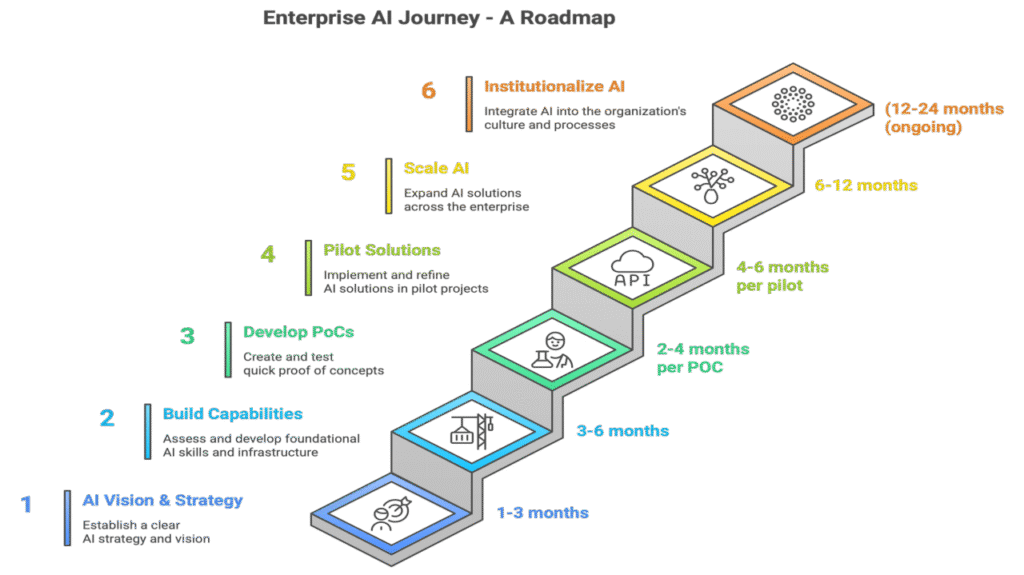
The list doesn't require to be extensive, though it can be. Its function is to provide everyone a common view of what matters most to business. Work through it in order so that every use case traces back to real worth. Search for where the organization needs much better outcomes before you think about AI at all.
Building Resilient AI-First Systems in 2026
Frame the search in plain terms such as "where do results miss expectations" or "where do people hang around on repetitive jobs." This technique keeps AI pointed at value instead of novelty. Tradeoff: A broad scan surfaces lots of opportunities, so stay focused on the result spaces that are both measurable and meaningful.

Classify each usage case based on how it produces value. These utilize cases improve how people or groups work inside existing tools.
These utilize cases change how the organization runs or provides worth. Examples include automated consumer routing or demand forecasting. They typically need integration with other systems and can combine more than one AI type. This is a consideration, not a decision, and you can revisit it as the use case ends up being clearer.
Analyzing AI Impact On Next-Gen Business ModelsYou have the freedom to adjust it later. produces outputs that can vary even for the same input, and it works well when inputs are disorganized such as natural language or files. It fits cases where the workflow isn't repaired and where you desire the system to develop content or assist a human choice.
produces constant and repeatable outputs from structured inputs. It fits cases where the workflow is specified and the exact same input should result in the same result. Lean by doing this for jobs that depend on accuracy such as prediction or anomaly detection. Apply this same series across every service location. A repeatable flow reduces confusion, avoids you from reaching for generative AI where it isn't needed, and prepares you to pick a solution course next.
Mapping the Next Evolution of Corporate SystemsHow to Scale Growth With Integrated AI Solutions
Microsoft provides four adoption models that trade personalization for simpleness under a shared responsibility method. As you move from the very first design to the last, you gain control and provide up speed.
Use the following guidance to weigh 4 aspects for AI service: Evaluation the abilities of Microsoft and Azure AI options to see if they meet the needs of your use case. Confirm the needed data exists and is accessible for the situation. Verify that each use case is achievable with current capabilities before you select an option.
Microsoft ready-to-use AI services, called Copilots, raise efficiency quickly because they need little setup and work with data you currently have. Microsoft 365 Copilot adds AI support across Office apps. In-product and function based Copilots concentrate on specific task roles and industries.: Copilots provide the fastest outcomes, however they offer less customization than a custom service.
Organization Apply protective level of sensitivity labels to Microsoft 365 information so security follows the content. General IT and data management Role-based Copilots and agents Role-specific help for Security, Sales agent, Service, and Finance representative. Business Yes. Data-connection and plug-in alternatives are readily available. General IT and data management Microsoft 364 Copilot gain access to or Security Compute Systems (SCUs) for Security Copilot In-product Copilots and agents AI inside products such as GitHub, Power Apps, Power BI, Characteristics 365, Power Automate, Microsoft Fabric, Microsoft Entra, and Azure.
Navigating the Synergy of AI and Cloud Technology
Private No None Free Microsoft provides SaaS development choices to build AI agents. Copilot Studio lets organization users develop AI assistants with natural language, while Microsoft 365 Copilot extensions let you customize business Copilot with company-specific information and procedures.

Latest Posts
Key Steps for Adopting Transformative Cloud Tech
Is Your Organization Prepared for the 2026 Transition?
Why AI and Cloud Integration Is Crucial